Showing posts with label Tin Coins. Show all posts

PAHANG TIN JOKOHS; SS28, SS29 & SS33

Pahang Tin Jokoh (Private Monetary Tokens) SS28, SS29 & SS33.
Rarity: RRR

During the reign of Bendahara Wan Ahmad (Sultan after 1882), it was the practice for rich Chinese towkays (businessmen or merchants) to operate gambling dens. The right to operate these gambling dens could only be obtained with the prior approval of the Sultan who use to farm out the gambling rights by issuing a licence to the highest bidder. The operators or lessees of these gamblings dens then had to seek the approval of the Sultan to mint their own Jokoh ( private monetary tokens) for use in their gambling premises. The issue of Jokoh was necessary as the use of the bulky Tampangs  ("Tin Hat money") was very inconvenient.

These Jokoh were legal tender in Pahang and circulated side by side with the official Tampang coinage issued by the Sultan. The exchange rate was four Jokohs = one large Tampang (size 75mm x 75mm) = four cents. Pahang was the only State where the Jokoh were equal to one cent or 100 Jokoh = one dollar. In the other Malay States i.e. Kelantan and Trengganu, the Jokoh were equal to 2.1/2 Cents or 40 Jokoh = one Spanish or Mexican Dollar.

Most of the Pahang Jokoh bear Chinese inscriptions on both sides with the exception of a few pieces which also include Jawi. The Chinese inscriptions on the Jokohs indicate either the name or the sign under which the shop, establishment, firm or company operated. The reverse usually make common references to particular gambling games (e.g. Fan Tan, Chap Jee Kee etc;) or convey good luck wishes. Others wish their possessor good fortune in drawing cards, dominoes, throwing the dice etc.

Although these Jokoh were not issued under the direct control of the Sultan's mint or treasury, the official character of these Jokoh being used as coins is clearly indicated on several pieces. Some of these Jokohs denote that they were for general circulation or State currency.

With the advent of British protection in Pahang in 1888, these Jokoh gradually fell out of use and were replaced with the coinage of the Straits Settlements. All Jokohs of Pahang are very rare and seldom seen.

Code: SS28/RRR
Obverse: In Chinese " Seng Hua Pang Hang ". Seng Hua is the name of the issuer. " Pang Hang " is the transliteration in the Amoy dialect for Pahang. Countermarked with "Sin" (trustworthy).

Reverse: In Chinese " Cai Sing Kong Zhau" ( Shine by the fortune star)

Edge: Plain.

Weight:

Diameter:

Composition: Tin (square central hole).

Code: SS29/RRR
Obverse: In Chinese " Kok Liu Thong Poh"

Reverse: In Chinese " Cheng Soon". In Jawi " Aku Punya " (Ah Ku 's token)

Edge: Plain

Weight:
 

Diameter:
Composition: Tin (square central hole).

Note: The Batavian Museum acquired a specimen of the above Jokoh in 1885 and recorded its origin as Kwantan, i.e. Kuantan, Pahang.
The Jawi inscription " Aku(punya)" is the name of a Chinese issuer who may have been called Ah Ku. Literally translated " Aku punya" means (This is mine).


Code: SS33/RRR
Obverse: In Chinese " Kok Liu Thong Poh"


Reverse: In Chinese "Wan Si Cu Yuan" ( Everything realize as wish)

Countermarked with " Li " (Profit)

Edge: Plain

Weight:

Diameter:
Composition: Tin (square central hole).


Available at Dickson Niew Collection shop:


Frank Goon Book by Spink. RM750. (Issued only 600 copies) Limited stocks !

Published by Numis Coins & Notes -Raymond Chang.
(Issued only 3,333 copies) RM35
At: Dickson Niew Collection Corner at Subang Jaya
No.58, Jalan SS14/2, 47500, Subang Jaya, Selangor.

Or email or sms your name, contact numbers and address to:
Email:dicksonniew33@gmail.com or sms to 017-9796337.

SINGGORA TIN JOKOH ZHEN XING TONG BAO 1879-1881

Thailand Singgora 1879-1881 Tin Jokoh Zhen Xing Tong Bao
Rarity: RRR
Thailand-Singgora 19th Century  tin Jokoh "Zhen Xing Tong Bao" Or a tin  Jokoh of Patalung?
This is a rare and an interesting piece of Thailand tin Jokoh.It is either a Jokoh from Singgora or Patalung or is it a private token. ?

According to Major Pridmore the Chinese characters on the obverse were translated as "Zhen Xing Tong Bao" and is the money of the "Impulse to Prosperity" company.
The reverse mentions the City of Singgora - "negri singgura" - in Arabic Malay and "song khla" in Siamese.

It appears to be Pridmore #213. A similar obverse is listed as KM#2 in Krause but the obverse is much more stylized on this piece. It is 40.00mm in diameter and weighs at 14.00gm. The composition is tin .

TERENGGANU TIN PITIS/KEPING IN CONVEX SHAPE

Undated Convex Shape Terengganu Tin Pitis/Keping
Rarity: Unique/Unlisted/SS33                          

Terengganu Pitis/Keping Estimated to circulate in the state of Terengganu around late 18th century until early 19th century.
This is an unlisted Pitis/ Keping (similar to SS33) casted in convex shape. I was lucky to inherit it from a very senior collector from down South during my recent trip to Singapore.
I welcome your ideas on how it was formed in convex shape. Thank you in advance.
Obverse in Arabic : Kali Malik Al Adil ( Translation: The Reign of the Just Ruler) In Convex shape.

Reverse: Blank (Concave shape)

Weight: 1.82gm.

Diameter: 20.00mm
Edge: Plain

Composition: Tin

Source: The Encyclopaedia of The Coins of Malaysia Singapore And Brunei (Saran Singh)

SONGKHLA 400 bia TIN COIN

 South Thailand Tin Coin: Songkhla 400 bia.
These coins were produced beginning from the end of 18th century and the second half of the 19th century. There were issued under the authorized of the local governor rather than the Siamese King.

These series bear the name of the principality in Thai "Songkhla", Jawi script Malay "Negeri Singora" on the obverse and Chinese "Sung-Cheng-Tung-Pao" (Singgora Currency) on the reverse.
SUNG CHENG TUNG PAO
The coins were issued in three denominations: 400 bia (Corresponding to 1/2 fuang, or sik), 200 bia (1/4 fuang, or sio) and 100 bia (1/8 fuang or att). The 400 bia pieces are the more common denomination but they are still exclusive; all types of 200 bia coins are rare, while all types of 100 bia coins are very rare.
Reference:"Siamese Coins From Funan to the Fifth Reign" authored by Mr.Ronachai Krisadaolarn and my friend Mr.Vasilijs Mihailovs.

Read more: http://dniewcollectors.blogspot.com/2014/07/siamese-singgora-tin-coin.html#ixzz3UZ0FjzfH

TERENGGANU TIN JOKOH TECK SOON KONGSI WITH "RED DOTS'

Tin Jokoh Of Terengganu 1907 "Teck Soon Kongsi" With Red Paint Dots.
Rarity: Scare/SS44A
Jokoh Trengganu is a private monetary tokens.Trengganu Sultan permitted the Chinese Kaptans (chinese headman) to start issuing monetary tokens which were called JOKOH around 1877 for use in their gambling dens and areas under their jurisdiction. These Jokoh were legal tender in the capital and nearby areas. The Jokoh were made of tin or pewter and were based on the familiar cash coins of China; a circular coin with a square central hole.The acceptance of these Jokoh by the general public depended upon widespread confidence in the ability of the issuers to redeem them with silver dollars when required.

The word Jokoh is derived from the Malay word "Jongkong" which refers to a hollowed out boat but in this context referred to the central hole in the Jokoh. Some of the Jokoh imitate the words found on the Chinese cash. The Jokoh also had Jawi inscriptions on them so as to enable the Malays to recognize the issuer. Some of the Jokoh have a thin wire or other metal impressed in the flan while others occur with several countermarks. This was inserted the issuer to prevent forgery.
Read more: http://dniewcollectors.blogspot.com/2013/01/jokoh-trengganu-hiap-hin-company.html#ixzz3RFypcqvf

The "Red Paint Dot" found on the obverse and reverse of the Jokoh is a symbol of happiness, joyful, prosperous, worship, wealthy, longevity. It was used during the important ceremonies like weddings, birth of children, birthday celebration, New Year, divine service, worship to god prayers etc.
Read more: http://dniewcollectors.blogspot.com/2012/12/brunei-cannon-2.html#ixzz3RG4O5UU
Obverse
Obverse:
Within a circle of dots in Chinese Teck Soon Kongsi ( De Shun Gong Si, Teck Soon Company) and Peng Ngo (cyclical year 1907). A "red paint dot" at 12.00 o'clock position.

Reverse
Reverse: Within a circle of dots in Jawi Sin and Hee (issuer's name Sin Hee) above and below the hole. To the left and right of the central hole are the lions rampant without holding a trident in the paws of the lion that similar to SS43. A "red paint dot" at 6.00 o'clock position.

Diameter: 32.mm

Edge: Plain

Weight: 7.3 g

State of Terengganu (1725-1967) - one of the Malaysia peninsula sultanats. Coin is a private monetary token (jokoh), issued during reign of Sultan Zainal al Abidin III (1881-1918).
Description from The Encylopaedia of The Coins of Malaysia, Singapore and Brunei, 1400-1967, Saran Singh.

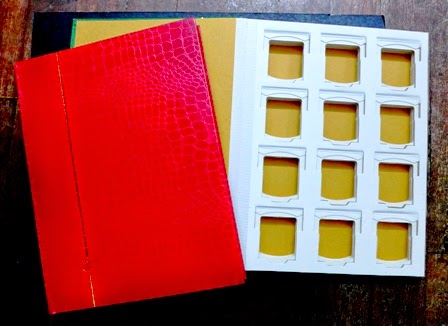
Tin Coin Album for sale.
Hard Cover. Size: 60 Coins. Export Quality
H:28cm X W:21.2cm X T:2.3cm
1 page X 12 coins X 5 pages.
RM48 per album. COD at :
Dickson Niew Collection Shop at Subang Jaya.
No.58, Jalan SS14/2, SS14, Subang Jaya, 47500, Selangor, Malaysia.
Tel: +6 017 9796337.
Email: dicksonniew33@gmail.com.


TERENGGANU JOKOH HIAP CHIN PENG KEE

Tin Jokoh Terengganu "Hiap Chin Peng Kee".
Rarity: RRR/SS41

Terengganu Tin Jokoh is a private monetary token , issued during reign of Sultan Zainal al Abidin III (1881-1918) by various Chinese Kongsi.


Obverse: In four Chinese characters "Hiap Chin Peng Kee" (Chop Hiap Chin) in large characters. Each word is separated by a line of small diamonds. Anti-counterfeiting feature made by copper wire falling out. This copper anti-counterfeiting wire was always mistaken by people for gold wire and was removed with intention.
Obverse

Obverse

Reverse: In Jawi "Boon Peng" and two prawns within a circle of small triangles. Each word and prawn is separated by a line of small diamonds.
Reverse

Reverse

Edge: Plain.

Weight: 8.45gm, 8.46gm.

Diameter: 32mm.

Composition: Tin (Square central hole).

Item Code: SS41

BOTELHA TANGGA OF MALACCA (1629)

Botelha Tangga Of Malacca (Emergency Coin, Circa C.E. 1629)
Rarity: RRRR/Sim F3.18

This undated silver coin minted during the Portuguese occupation was an emergency issue struck for special purpose of paying troops engaged in the defence of the city of Malacca. What follows are particulars of the coin and a short biographical note on the illustrious person after whom it was named.
Obverse:
Crowned Arms of Portugal between the letters M.A. the mintmark of Malacca Mint with dots above and below each letter within a line circle.

Reverse:
Crude tanga monogram - large T on big A (for Tanga Asia) dividing the letters R.F. (for Rei Felipe) King Philip, a dot on each side of the apex of the A, one on each side of the stem of the letter T, one on either side below the letters R and F, and another dot within the letter A, all surrounded by circle

Diameter: 15mm
Weight: 2.54 grammes
Rarity: RRRR

                The Captain-General of the Portuguese Fleets in the East, one Dom Nuno Alvares Botelho, had distinguished himself since 1623 by his victories over the Dutch Fleet which was attacking Portuguese territories throughout the Orient. After his return to Portugal he was appointed Governor of Goa by King Dom Felipe III. His letter of appointment was issued to name of Pereira, the name by which he was known at Court in Lisbon. After the death of his elder brother but before he took up the appointment, he had to give up the name of Pereira and take the family name of Botelho.

                Due to this discrepancy in names, officials at Goa refused to acknowledge him as being the man designated as Governor, in the Royal Letters. The matter had to be referred to Lisbon, In those days of sailing ships confirmation took many months.

                As Capt. Botelho's services were most urgently required in the Straits of Malacca, he appointed two Deputies - Capt. of Goa, Dom Lourenco da Cunha and Chancellor Gonzalo Pinto da Fonseca, entrusted them with the administration of  Goa and immediately left for Malacca.


                By the time Botelho reached Malacca at the head of a large fleet, the city had been under siege by strong Achinese forces for five long months. The Hill had been captured and was being used as base to destroy the Portuguese garrison at Bukit China. After his arrival the Achinese and their allies evacuated their positions and fled inland in haste.

                The Portuguese forces had to be paid rather urgently. The Malacca mint had not been operating for very many years; and there was a serious shortage of silver currency. To solve the problem, Capt. General Botelho was appointed Mint Master of the Malacca Mint. He could then order the minting of a silver coin of the value of a (Goan) tanga without waiting for authorization from Lisbon, a matter which could take as long as two years depending on the monsoon. Later the Viceroy of India, Dom Miguel de Noronha (Conte de Linhares) had to justify to King Dom Felipe the coinage of money without royal assent.

The Viceroy Dom Miguel replied to His Majesty:

"Nuno Alvares Botelho coined in Malacca some coins called Botelhos, which I praised, to redeem his needs."

                This was how this undated coin came to be known as a botelha tanga after the family name of the victorious Captain of the Fortress of Malacca.

                Being an emergency issue, it was of rather crude design. The metal composition was low-grade, silver and brass, in order to give the coinage a chance of remaining in Malacca, as Chinese and Japanese traders has the habit of converting coins of high silver and gold fineness into bullion to export back to their own countries.

                Eventually, the Achinese suffered a great defeat as their formidable armada of 236 ships was annihilated by the Capt.-General's fleet in waters near Muar River.

                After that great victory Botelho continued to hunt and harrass the Dutch throughout the South Seas. The government by triumvirate, set up at Goa on 29th July, ended on 21st October, 1629. By that date, all doubts and uncertainties had been cleared.

                The governorship of Botelho did not continue very long. On 16th May 1960, during a cruise in Sumatran waters, he encountered a ship carrying gunpowder for the Dutch forts. While directing operations after boarding the Dutch ship, an explosion occurred, and both ships were blown up. Botelho, the 44th Governor of India and a member of the State Council of His Majesty Dom Felipe, lost his life that day. His body was brought back to Malacca where he was given a grand funeral.

                The tombstone of this brave Governor has never been found. The reason may be that the Dutch, who succeeded the Portuguese in Malacca after 1641, sometimes resorted to obliterating some old Portuguese tombstones to serve new Dutch graves, due to scarcity of granite.

Source:E.E.Sim., J.S.M., P.N.M., F.R.N.S.
President, Malaysian Numismatic Society

Special thanks to Mr.Wei Yen Kong for taking the trouble to visit me at Dickson Niew Collections in Subang Jaya today just to share his latest collection of this very rare piece of Portuguese coin.Cheers!

SIAMESE SINGGORA TIN COIN

Siamese Singgora/Songkhla Tin Coin With Arabic Inscription.
In the 18th century many Chinese immigrants, especially from Guangdong and Fujian, came to the province. Quickly rising to economic wealth, one of them won the bidding for the major tax farm of the province in 1769, establishing the Na Songkhla (i.e. 'from Songkhla') family as the most wealthy and influential.

In 1777 the family also gained political power, when the old governor was dismissed and Luang Inthakhiri (Yiang), Chinese name Wu Rang (呉譲)) became the new governor. In 1786 the old governor started an uprising, which was however put down after four months. The post was inherited in the family and held by 8 of his descendants until 1901, when Phraya Wichiankhiri (Chom) was honorably retired as part of the administrative reforms of Prince Damrong Rajanubhab.

This is a small piece (only 24mm in diameter) of 1809 A.D. unlisted Singgora Tin Pitis which I collected recently. It was not listed in the book named "Siamese Coins From Funan to the Fifth Reign" authored by Mr.Ronachai Krisadaolarn and my friend Mr.Vasilijs Mihailovs.

Obverse: In Arabic " Malik Al Adil" ( The Just Ruler). It is very similar to the Terengganu's Pitis. It exhibits three dots under the Arabic inscription " Al Adil".

Reverse :In Siamese " song khla " (Singgora).

Edge : Plain.(2.5mm)
Diameter: 24mm ( Size of Malaysia 20 Cents Coin).
Weight:11.33gm.
Thickness: 2.5mm.

 I need more information about this Singgora tin coin, you are most welcome to contribute!

Comments From:

Vasilijs Mihailovs

11:51 PM
 29-7-2014
 
 
I will discuss this piece with Ronachai Krisadaolarn on Friday. I have
never seen anything similar to that. The Thai script does say
"Songkhla"; the Jawi script spells "Malik Al-Adil" with a couple of
script mistakes, suggesting that the coin might have been produced in
what is Thailand today, not in Malaysia. I will follow up on this coin -
if genuine (and so far it looks genuine to me), this is a very
interesting specimen. Can you send me the picture files by email please,
along with weight and diameter?

Are you coming to the Bangkok auction this weekend by chance?

Best regards - Vasilijs